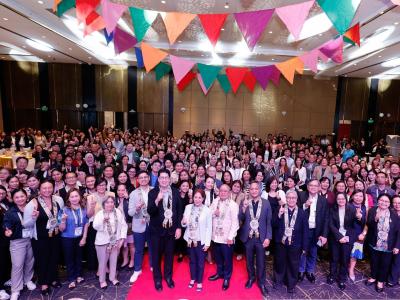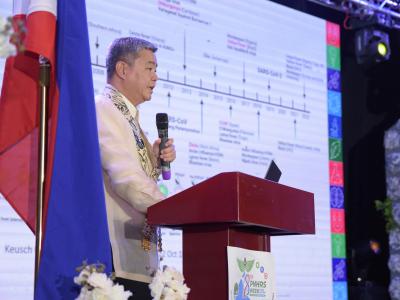
- 4th Health Research for Action National Forum
- Forum’s KP4KP theme underscores research to policy links
- Research Priority Areas
- World Conference on Science and Technology
- FAQ - NUHRA/RUHRA
- DOST-PCHRD funds WMSU’s research on exclusive breastfeeding in Zamboanga City
- DOST holds health tea making seminar-workshop
- Recognition of trailblazing efforts in medical research and clinical innovation
- CVHRDC Forum on Challenges and Opportunities in Research
- EVHRDC members attend 31st PCHRD anniversary
-
Recognition of trailblazing efforts in medical research and clinical innovation
-
EVHRDC members attend 31st PCHRD anniversary
-
Study confirms exclusive breastfeeding protects infants against diarrhea
-
Male testosterone decreases during fatherhood, study says
-
VCO is good saturated fat, says expert
-
Taro (Gabi) in milk drink promotes healthy digestion
-
GIS-based project on dengue reveals mosquitoes' favorite habitat
-
Water fern (Salvinia molesta) shows potentials in removing water pollutants
-
PCHRD urges regional health research consortium to address broader RU concerns
-
NCDs are sickness of poverty not of affluence
-
Acta Medica Philippina accepted for inclusion in Scopus
-
Invitation to attend Nanotechnology Workshop: 24-27 November 2011, Malaysia
-
PNHRS advocates research translation and evidence-informed policymaking, launches first Lancet South
-
Health consortium urges passage of health research bill
-
Health Researches Cited
-
PNHRS Consultation with Region 4 advisory council 20July09
-
Resource Mobilization
-
Research Utilization
-
Research Agenda
-
PNHRS Consultation with CVHRDC Advisory Council 07July09
-
PNHRS Consultation with Region 4 researchers 20July09
-
Structure, Organization, Monitoring & Evaluation
-
Highlights of the R1HRDC Consultation 13July2009
-
FAQ - NUHRA/RUHRA
-
Research Priority Areas
-
The Philippine National Health Research System
-
4th Health Research for Action National Forum
-
Regional Health Research Development Consortia
-
DOH Secretary pushes for needed reforms to achieve Kalusugan Pangkalahatan
-
Collaboration, funding mechanisms, capacity building and publishing, next steps for Philippine health research
-
Medical informatics, biobanks and genomics research enriches evidence-based medicine, says expert
-
“Create a research culture to leverage investments in health” – Sen. Angara
-
PCHRD to hold 2nd National Medical Writing and Peer Review Workshop in Davao City
-
6th PNHRS Week Celebration highlights partnership in health research
-
Fourth International M-Libraries Conference 2012
-
PCHRD holds 1st National Medical Writing and Review Workshop in Cebu City
-
MMHRDC conducts research forum, advocates healthy lungs for a healthy life
-
National Health Research System Week
-
1st Student Research Competition in Health Science and Technology
-
Focus Group Discussion on Research Utilization for Consortia RU Committees: Synthesis
-
WV institutions to showcase health researches, activities in Bacolod
-
Summary of the 5th PNHRS Week
-
PNHRS week opens with good news
-
5th PNHRS Week celebration to highlight innovations for better health
-
World Conference on Science and Technology
-
Poster exhibit contest shows potentials of young health researchers
-
PNHRS stakeholders meet to seek creative ways to share resources for health research
-
Fine tuning of PNHRS strategies took centerstage at the 4th PNHRS Week
-
4th PNHRS Week Celebration to highlight resource sharing for more mileage in health research
-
2nd PNHRS Week Celebration: Convergence is Key to Success
-
5th Health Research for Action National Forum
-
6th Health Research for Action National Forum
-
DOST-PCHRD funds WMSU’s research on exclusive breastfeeding in Zamboanga City
-
DOST holds health tea making seminar-workshop
-
CVHRDC Forum on Challenges and Opportunities in Research
-
PCHRD awards VSU Tuklas Lunas Center
-
Health Research Evaluation Training at USI
-
MAHLAP GIVES PLAQUE OF APPRECIATION TO DOST-CVCHRD
-
Health Research Evaluation Training at USI
-
ZCHRD concludes three-day Research Proposal Writeshop
-
HRDCR IV-A holds Research Methods Workshop
-
WHO issues new guidance on dietary salt and potassium
-
BCHRD Undertakes Health Research Proposal Packaging Process (HRPPP)
-
BCHRD conducts research method guidelines
-
CARAGA HRDC calls for the 2013 Best Mentor in Health Research Award
-
HRDC-XII Regional Research Agenda for 2013-2016
-
HRDC- XII Accomplishments for CY 2012
-
CVCHRD Logo Design Contest
-
[Photos] ARMM Health Research Consortium Reorientation Meeting and Strategic Planning Workshop
-
AHRC planning workshop sets new wheels in motion for health R&D in the ARMM
-
Health Research Proposal Writeshop slated
-
BCHRD holds HERDIN training
-
HRDCR IV-A Call for Proposal
-
EVHRDC conducts Strategic Planning
-
MMHRDC research forum addresses research gaps in cancer
-
Inter Regional Research Presentation
-
AHRC Streamlining Activity
-
MIMAROPA signs MOA establishing regional health research and development consortium
-
Logo Design Contest Guidelines for 2014 Global Health Research Forum
-
Forum’s KP4KP theme underscores research to policy links
-
Call for Applications: TDR Clinical Research & Development Fellowships
-
Submission of Proposals
-
SAVING LIVES AT BIRTH: A GRAND CHALLENGE FOR DEVELOPMENT (Round II) Request for Applications
-
Call for Proposals for Presentation in the ISCCECC12 3rd Annual Conference on February 2012
-
Invitation to attend Nanotechnology Workshop: 24-27 November 2011
-
Filipino-French Scientific Cooperation Program (FFSC) Fiscal Year 2012 Call for Applications
-
Best Mentor For Health Research Award
-
Call for Nominations for NAST & NSTW Awards
Home
DOST-PCHRD funds WMSU’s research on exclusive breastfeeding in Zamboanga City
- Details
- Created on Tuesday, 14 May 2013 14:18
- Last Updated on Tuesday, 14 May 2013 14:18
- Written by Mr. Ricardo J. Apolinario III
In a recent study conducted by the Department of Science and Technology – Food and Nutrition Research Institute (DOST- FNRI), the Filipino mothers who are exclusively breastfeeding their infants are declining in the Philippines. In addition, exclusive breastfeeding is practiced by only 8.6 percent of the survey respondents, while a high 55.4 percent feed their children with other milk or in combination with complementary feeding. This low level of breastfeeding practices for infants and young children is consistent with the high prevalence of malnutrition among 0-5 year age group where 22.2 % and 27.9 % are underweight and stunted, respectively. Further, the FNRI-DOST survey also shows that among three-month old infants, nine out of 10 were given water as complementary food. Among four-month old infants, two out of 10 were given with sugar. These results fell short of the recommendation that only breast milk should be given to infants before six months.
In line with this, Ms. Melanie F. Lear, a researcher and faculty member of the Western Mindanao State University (WMSU), conceptualized a research proposal entitled, “Exclusive Breastfeeding among Selected Communities in Zamboanga City”. Generally, the study seeks to determine the factors affecting exclusive breastfeeding in selected communities in Zamboanga City. It also aims to determine the prevalence of mothers who exclusively breastfeed their infants in 2011-2012, as well as the knowledge and attitudes affecting exclusive breastfeeding practices of mothers in the local communities.
The proposal was submitted to the Zamboanga Consortium for Health Research and Development (ZCHRD) for review and endorsement for funding to the Philippine Council for Health Research and Development (PCHRD) of the DOST. PCHRD is committed to develop and enhance the research capability of institutions in the regions, as a strategy to improve the health conditions of Filipinos. The proposal received a total funding amount of Two Hundred Thousand Pesos (P200,000.00) through the DOST-PCHRD Grants-in-Aid Program. The research started last March 2013, and expected to complete in August 2013.
Ms. Lear said that the research findings and recommendations would serve as a baseline data to improve the maternal and child care delivery. Consequently, it will aid health service providers, practitioners, government agencies such as the DOH, DOST-PCHRD, and other non-government organizations to effectively formulate / enhance policies and advocacy to achieve better nutritional status of our infants and young children.
Taken from http://region9.healthresearch.ph/index.php?option=com_content&view=article&id=56:dost-pchrd-funds-wmsus-research-on-exclusive-breastfeeding-in-zamboanga-city&catid=1:latest-news
Date Monday, 06 May 2013 10:09
Recognition of trailblazing efforts in medical research and clinical innovation
- Details
- Created on Tuesday, 14 May 2013 14:14
- Last Updated on Tuesday, 14 May 2013 14:14
- Written by Jose Martin Punzalan
Medical researchers can now look forward to getting recognized for their work with the launch of the Geminiano T. de Ocampo Visionary Awards for Medical Research. Launched by the National Academy of Science and Technology (NAST) last November 8, 2012 at the Hyatt Hotel Grand Casino, the award seeks to recognize clinician researchers who have created the vision for medical research in the country through their outstanding work in medical research. It also aims to recognize those who have pioneered the trail for medical innovations and health research development.
The award is given in honor of the national scientist in the field of Opthalmology and the father of modern Philippine ophthalmology Dr. Geminiano de Ocampo, who himself was a visionary man who realized the future of medicine in the country through his groundbreaking and pioneering efforts in clinical practice and in research.
Candidates can be nominated by individuals, scientific and technological societies, professional societies or association, research institutes, universities and colleges.
Qualifications include:
1. Natural born citizens of the Philippines
2. Graduate of Medicine in an accredited and duly recognized school or college of medicine
3. Remarkable track record as a clinician practicing in the Philippines
4. Proven track record and accomplishment in medical research
5. No proven administrative case or case of moral turpitude
Nominations will be screened by the NAST secretariat and will be evaluated by a board of judges. The selected awardee will receive a gold medal, a plaque and a Php 100,000 cash prize.
In 1952, Dr. de Ocampo established the de Ocampo hospital, the first eye hospital in the Philippines. He was also the first Filipino to design a corneal dissector in 1956, and was the first Filipino to perform the first successful corneal transplant.
The award is made possible with the endowment of the de Ocampo family and will be administered by the NAST Health Sciences Division. It will be given biennially and will take place during the birth anniversary of Dr. de Ocampo, on September 16th of the year.
Nomination forms are available for download at the NAST website: www. nast.ph, or from the NAST secretariat, at the 3rd level, Science Heritage Building, DOST Compound, Bicutan, Taguig City.
From http://region7.healthresearch.ph/index.php?option=com_content&view=article&id=43:recognition-of-trailblazing-efforts-in-medical-research-and-clinical-innovation&catid=1:latest-news&Itemid=6
Date 24 April 2013 14:40
CVHRDC Forum on Challenges and Opportunities in Research
- Details
- Created on Tuesday, 14 May 2013 14:08
- Last Updated on Tuesday, 14 May 2013 14:09
- Written by Emeline C. Baco / Krissette Grace Campilan
The Committee on Human Resource and Development of the Central Visayas Consortium for Health Research and Development chaired by Dr. Melfer R. Montoya conducted a “Forum on Challenges and Opportunities in Research” on January 31, 2013 at the Cebu Institute of Medicine Amphitheater 1. This activity was conducted to increase awareness and knowledge on health research.
All member institutions together with the University of Cebu and the University of San Jose Recoletos who applied for membership in the consortium were invited and encouraged to send 15 participants per institution.
Three competent speakers were invited to share their expertise in the field of health research. Dr. Asuncion M. Anden, the Director of the Department of Health Region VII, Dr. Alan B. Feranil, the Director of the University of San Carlos, Office of Population Studies Foundation and Dr. Frances E. Edillo, a faculty member of the Biology Department of the University of San Carlos. Due to other important commitments, Dr. Anden was represented by Dr. Crisol Tabarejo, Epidemiologist of the Department of Health Region VII.
Dr. Tabarejo talked about the topic “Revisiting the National Unified Health Research Agenda (NUHRA)”. She said that the NUHRA 2011-2016 is a product of consultation and consolidation of the research priorities of the four core agencies of the PNHRS (DOH, PCHRD-DOST, CHED, NIH-UPM). She stressed the importance of the NUHRA that was designed for the following purposes: 1)To provide focus and direction on health research and development efforts that will address the country’s health concerns for 2011-2016, 2) To serve as a guide where policy makers, funding and donor agencies and researchers from public and private sectors should invest to ensure the health and productivity of the country’s productivity, 3) To assist in providing evidence based solutions to pressing local health problems, 4) To serve as basis to maximize resource utilization and minimize duplication of research efforts, 5) that NUHRA serves as the template for health research and development efforts in addressing the country’s health concerns for 2011-2016.
Dr. Tabarejo also emphasized that the formulation of the NUHRA 2011-2016 is anchored on the following national and international commitments: 1)The Millenium Development Goals (MDGs), 2) The Philippine Development Plan 2011-2016, 3) The “Aquino Health Agenda: Universal Health Care for all Filipinos”, 4) The Presidential Coordinating Council on Research and Development’s (PCCRD) National R&D Priorities Plan 2011-2016, 5) The DOST Five-Point Priority Program for 2011-2016. She ended her talk by encouraging the audience to come up with quality researches aligned with the NUHRA or RUHRA.
Dr. Alan B. Feranil discussed the topic “Looking for and Obtaining Funding for Health Research in the Philippines.” He shared to the group the different funding agencies coming from different sectors of the society. Among the government agencies that fund health research are the Philippine Council for Health Research and Development (PCHRD), Department of Health, DENR-Environment Management Bureau for environmental issues, and DOLE-Occupational Health and Safety Center for occupational health concerns. Local foundations such as Gruppo Medica and Pfizer Foundation also fund health researches. Foreign sources include Korean International Cooperation Agency (KOICA), UNFPA (United Nations Fund for Population Activities), UNICEF, UNAIDS, USAID, and many others. Dr. Feranil emphasized that research funding is not a problem but focus should be on producing quality researches.
Dr. Frances E. Edillo focused her talk on the “Research Operational Mechanism in Academic Institutions.” The lecture encouraged all universities to become research universities. She also brought in the new typology of Philippine Educational Reform (cited by Salas, 2011) that for a University to remain a university, it should meet the following criteria: doctoral programs in at least 5 disciplines, 70% of BS programs with a thesis or project paper, International linkages, 10% of enrollment should be graduate programs, 30% of faculty be actively involved in research and 10% of faculty should have publications in refereed journals.
A lot of participants showed their interest to know more on the different topics presented by the speakers that it led to a very lively discussion during the open forum. Dr. Amelia Biglete, the Regional Director of the Commission on Higher Education Region VII confirmed that the Commission on Higher Education is very much willing to fund quality researches.
From http://region7.healthresearch.ph/index.php?option=com_content&view=article&id=42:cvchrd-forum-on-challenges-and-opportunities-in-research&catid=1:latest-news&Itemid=6
Date 23 April 2013 15:08
EVHRDC members attend 31st PCHRD anniversary
- Details
- Created on Tuesday, 14 May 2013 14:06
- Last Updated on Tuesday, 14 May 2013 14:06
- Written by Ms. Mae Anne D. Reyes

EVHRDC members attended the 31st PCHRD Anniversary celebrations held at the Sofitel Philippine Plaza, CCP Complex, Metro Manila last March 18, 2013. The one day event was focused on the theme "People at the Center of Health and Health Research" with former Health Secretary Dr. Alfredo G. Romualdez,Jr., as the keynote speaker. To welcome the guests, Dr. Jaime C. Montoya, PCHRD Executive Director, started thanking everyone who attended the ceremonies and to all partners who have strived hard in achieving the goals of the council and the health research system as a whole. He also happily announced that the Philippines will be hosting the forthcoming "2014 Global Forum for Health Research".
A message was given by Secretary Mario G. Montejo, DOST Secretary, where he congratulated PCHRD on its 31st year of unwavering efforts to develop the health research system. He mentioned some initiatives of DOST on health. He focused on gadgets with its application accessible through the internet. On of this is the RX Box, which allows consultation through the net where doctors in the hinter barangay could seek assistance from doctor specialists through email or through texting. Another message was delivered by Secretary Enrique T. Ona, DOH Secretary, who stressed on the sustainability of the program "Kalusugang Pangkalahatan or Universal Health Care". He stressed that it is important to gather evidences of success as these are crucial in policy making. Furthermore, he stressed that the Philippines can learn from best practices in other countries and with some modifications apply these learnings. On of the new initiatives towards mobilizing funds for research was done by downloading these funds to PCHRD who managed the funds. Another DOH initiative is the establishment of a Health Research Hub at DOH currently chaired by Dr. Ernesto Domingo. This will hopefully capacitate DOH staff to conduct research and eventually manage its own research funds to the fullest.
The keynote message was given by the 1st Executive Director of PCHRD, Dr. Alberto G. Romualdez. He walked through the history of PCHRD which started with 5 brains who formulated the health research agenda with bias on human beings. He was delighted of the many initiatives done by PCHRD through the years just to move research forward. He also acknowledged the presence of the Academician Gelia Castillo (who was supposedly the one who would have delivered the keynote address but preferred to just be a reactor to the different topics lined up for the day). He ended his message by congratulating the men and women of PCHRD for the countless accomplishments of the council sustaining the efforts in health R&D.
The Panel discussion that followed were on: 1) People's Health: Listening and translating Health Needs to Research Actions; 2) Research Actions: Improving research utilization by increasing research publishing productivity and International Visibility; and 3) New paradigms and global trends in research publications: how Philippine research benefits.
The activity was attended by Health Research Consortium Members, PNHRS Members, SUCs, National Government Agencies Representatives, Private Organizations and Private Individuals.
PCHRD awards VSU Tuklas Lunas Center
- Details
- Created on Tuesday, 14 May 2013 14:04
- Last Updated on Tuesday, 14 May 2013 14:04
- Written by Ms. Mae Anne D. Reyes
The Philippine Council for Health Research and Development (PCHRD) had formally awarded the Tuklas Lunas Center Program to the Visayas State University, Visca, Baybay City, Leyte. This was done during 31st PCHRD Anniversary at the Sofitel Philippine Plaza Hotel, CCP Complex, Metro Manila. Dr. Jaime Montoya, PCHRD Executive Director, together with Sec. Mario G. Montejo, DOST and Sec. Enrique T. Ona, DOH, handed the plaque to Dr. Jose L. Bacusmo, VSU President and Dr. Edgardo Tulin, VP and Center In-Charge.
Tuklas Lunas refers to the drug discovery research and development program, initiated by PCHRD in its desire to provide solutions to the countries' medical needs. Through this program, PCHRD aims to establish a Drug Discovery Database which will store information on all researches conducted on natural products. This will serve as a tool in guiding researchers as to which plant/animal species have the potential for further studies leading to the discovery of new drugs.
The first Tuklas Lunas Center was awarded to Mindanao State University - Iligan Institute of Technology.
Taken from http://region8.healthresearch.ph/index.php?option=com_content&view=article&id=31:pchrd-awards-vsu-tuklas-lunas-center&catid=1:latest-news&Itemid=6
Date 10 April 2013 11:57
Health Research Evaluation Training at USI
- Details
- Created on Tuesday, 14 May 2013 14:00
- Last Updated on Tuesday, 14 May 2013 14:00
- Written by Maria Vicenta Corazon Guidote
Very keen on realizing its objective of capacitating local researchers interested in health and health-related studies, the BCHRD conducted the Research Evaluation Training with the twofold goal of aiding the Research Proposal Evaluation Team in developing a tool for evaluating research proposals, and assisting researchers in fine-tuning their revised proposals.
The consortium’s Evaluation Team is composed of the Research and Development (R&D) and Ethics Review (ERC) Committees. The research proponents invited to the training were those who participated inthe Research Methods Training conducted on January 29-31, 2013 at Bicol University, Legazpi City.
The Research Evaluation Training, held on February 27-28, 2013 in Naga City, at the Universidad de Sta. Isabel (USI) College of Nursing Lecture Hall, was the second phase of the Health Research Proposal Packaging Process (HRPPP), which the BCHRD is implementing; the Research Methods Trainingin January was Phase I of the process.
The Participants were: Prof. Sandy C. Lasa of USI, chairman of the ERC; other USI faculty- Profs Janet S. dela Cruz, Teresa B. Pambid, Glenda C. Icaro, Mary Ann Tumbado, and Mr. Rhandy V. Salvani; Prof. Elma R. Peralta and Dr. Ma. Clara Ll. Rubino Faculty and Dean respectively of Ateneo de Naga University (AdNU); Dr. Yolanda L. Castroverde and Dr. Carmelita S. Baylon of the University of Nueva Caceres (UNC); Dr. Raul G. Bradecina, Profs. Ana L. Vargas, and Emelina R. Padayao of Partido State University (PSU); Dr. Nilo B. Romeroso of Ago Medical Center-Bicol Christian College of Medicine (AMEC-BCCM); Prof. Joyce S. Obis of University of Saint Anthony (USANT); Prof. Athena G. Masip of Aquinas University of Legazpi (AUL); researchers and BCHRD committee members who were part of the Bicol University delegation included Dr. Richard L. Bartolata (BUCN), Profs. Ida Francia H. Revale and Daile Meek Salvador-Membreve (BUCS), Profs. Michael Angelo D. Brogada and Aris J. Ordoñez (BU CS-CS/IT), Prof. Ma. Corazon R. Naz, (BUESC), Profs. Carina B. Orden and Dennis B. Gogola (BUTC), BCHRD Director Dr. Alma S. Banua, and the BCHRD Secretariat composed of Ms. Reizha O. Rito and Ms. Maria Vicenta Corazon B. Guidote. Also present was Ms. Marie Jeanne “Gigi” B. Berroya, PCHRD-DOST Regional Project Officer for Region V.
Resource speaker for the activity was Dr. Godofreda “Jody” V. Dalmacion, M.D., MSc, MHPEd, FPOGS- a professor at the Department of Pharmacology and Toxicology, and Assistant Director of the Department of Clinical Epidemiology, College of Medicine, University of the Philippines (UP), Manila. Dr. Jody earned the overwhelming respect of the participants with her sincere, pro-active approach. The research proponents appreciated the one-on-one sessions they had with her, and her promise to read their revisions. Assisting Dr. Jody was her very able co-facilitator, Mr. Juan Carlo “JC” G. Remulla, R.N., a University Researcher at UP Manila- National Institutes of Health.
The training ended with setting of the deadline for submission of revised proposals to the BCHRD secretariat, (total of 5 proposals) and finalization of the R&D and ERC Standard Operating Procedures.The two-day training/seminar involved pre- and post-tests, lectures, small group discussions, and critiquing of proposals.


Taken from: http://region5.healthresearch.ph/index.php?option=com_content&view=article&id=25:health-research-evaluation-training&catid=1:latest-news&Itemid=6
Date: Sunday, 24 March 2013 15:22
WHO issues new guidance on dietary salt and potassium
- Details
- Created on Wednesday, 06 February 2013 09:17
- Last Updated on Wednesday, 06 February 2013 09:17
- Written by Mr. Ricardo J. Apolinario III
31 JANUARY 2013 | GENEVA - Adults should consume less than 2,000 mg of sodium, or 5 grams of salt, and at least 3,510 mg of potassium per day, according to new guidelines issued by the WHO. A person with either elevated sodium levels and low potassium levels could be at risk of raised blood pressure which increases the risk of heart disease and stroke.
Sodium is found naturally in a variety of foods, including milk and cream (approximately 50 mg of sodium per 100 g) and eggs (approximately 80 mg/100 g). It is also found, in much higher amounts, in processed foods, such as bread (approximately 250 mg/100 g), processed meats like bacon (approximately 1,500 mg/100 g), snack foods such as pretzels, cheese puffs and popcorn (approximately 1,500 mg/100 g), as well as in condiments such as soy sauce (approximately 7,000 mg/100 g), and bouillon or stock cubes (approximately 20,000 mg/100 g).
Potassium-rich foods include: beans and peas (approximately 1,300 mg of potassium per 100 g), nuts (approximately 600 mg/100 g), vegetables such as spinach, cabbage and parsley (approximately 550 mg/100 g) and fruits such as bananas, papayas and dates (approximately 300 mg/100 g). Processing reduces the amount of potassium in many food products.
Currently, most people consume too much sodium and not enough potassium.
“Elevated blood pressure is a major risk for heart disease and stroke – the number one cause of death and disability globally,” says Dr Francesco Branca, Director of WHO’s Department of Nutrition for Health and Development. “These guidelines also make recommendations for children over the age of 2. This is critical because children with elevated blood pressure often become adults with elevated blood pressure.”
The guidelines are an important tool for public health experts and policymakers as they work in their specific country situations to address noncommunicable diseases such as heart disease, stroke, diabetes, cancer and chronic respiratory diseases. Public health measures to reduce sodium and increase potassium consumption and thereby decrease the population’s risk of high blood pressure and heart disease can include food and product labelling, consumer education, updating national dietary guidelines, and negotiating with food manufacturers to reduce the amount of salt in processed foods.
WHO is also updating guidelines on the intake of fats and sugars associated to reduced risk of obesity and noncommunicable diseases.
For more information please contact:
Gregory Härtl
Coordinator, News, Social Media and Monitoring
Telephone: +41 79 203 6715
E-mail: This email address is being protected from spambots. You need JavaScript enabled to view it.
Taken from: http://region9.healthresearch.ph/index.php?option=com_content&view=article&id=53:who-issues-new-guidance-on-dietary-salt-and-potassium&catid=1:latest-news
Date: 05 February 2013 09:18
BCHRD Undertakes Health Research Proposal Packaging Process (HRPPP)
- Details
- Created on Wednesday, 06 February 2013 09:13
- Last Updated on Wednesday, 06 February 2013 09:13
- Written by Dr. Alma S. Banua
The aim of the Philippine National Research Health System of ensuring that the health research is linked to the needs of our health system is cascaded to the vision of the BCHRD, of producing excellent health researches that are responsive to the needs of Bicolanos. In order to achieve the vision, this 2013, the BCHRD is working on packaging health and health related research proposals. This was expressed during the welcome address of Dr. Alma Banua, the consortium director, wherein she enjoined the participants to undertake the Health Research Proposal Packaging Process (HRPPP) with the consortium.
The HRPPP was conceptualized based on the principle of learning by doing by Aristotle. It is comprised of lectures by a resource speaker and workshop/application of the learning, thus the invited participants come with a research proposal that is refined as they undergo the HRPPP. The review of the research proposal is done by the Research and Development and Ethics Review Committees together with an expert recommended by the PCHRD-DOST.

The HRPPP is comprised of 3 phases, Phase 1:Basic Methods Training held on January 29-31, consisting of concepts on objective setting, research design and data analysis; Phase 2:Research Evaluation Training with technical review (Feb 27-28); and Phase 3:Package Proposals with Technical and Ethical Review (March 6-7). At the end of the process is a full blown proposal ready for submission to the funding agency.
Fifteen (15) research proposals were presented by the research participants from the member agencies. It was short listed to six (6) – all of which were aligned to the National Unified Health Research Agenda (NUHRA) and/or Regional Unified Health Research Agenda (RUHRA).
These six proposals are:
- Joel Olfindo et al- Biomedical Waste Management Practices in Government Health Care Facilities in Catanduanes
- Elma P. Peralta & Marlyn A. Daguno- Total Financial Cost of Motor Vehicular Accident Patients Admitted at BRTTH
- Dennis B. Gogola & Carina Orden- Wound Healing Properties of Guyabano Leaf and Malunggay Leaf Extract
- Jocelyn E. Serrano- Biological Activities of Pili Pulp Extracts
- Joan Nace- Phytochemical Characterization, Antimicrobial Screening, and Histological Study of Orthosiphon aristatus (Balbas Pusa)
- Michael Angelo B. Brogada- Feasibility of a Web-Based Health Status Monitoring and Decision Support System for Public Elementary Pupils of the Province of Albay

Taken from: http://region5.healthresearch.ph/index.php?option=com_content&view=article&id=24:bchrd-undertakes-health-research-proposal-packaging-process-hrppp&catid=1:latest-news&Itemid=6
Date: 05 February 2013 11:50
CARAGA HRDC calls for the 2013 Best Mentor in Health Research Award
- Details
- Created on Thursday, 31 January 2013 08:34
- Last Updated on Thursday, 31 January 2013 08:39
- Written by RHRDC XI Site Administrator
The Department of Science and Technology - Philippine Council for Health Research and Development (DOST-PCHRD) in collaboration with the Department of Health (DOH) is pleased to announce the search for the Best Mentor in Health Research Award for the year 2013.
The award aims to recognize excellence in mentorship that instills passion among researchers resulting to enhanced relevance and productivity in health research. It also aims to reward mentors who have built the capacities of researchers in the health sector which led to significant advances in the Philippine National Health Research System (PNHRS) thrusts as identified in the National Unified Health Research Agenda (NUHRA).
CVCHRD Logo Design Contest
- Details
- Created on Friday, 25 January 2013 09:21
- Last Updated on Friday, 25 January 2013 09:27
- Written by YHL

Taken from http://region7.healthresearch.ph/index.php?option=com_content&view=article&id=34:cvchrd-logo-design-contest&catid=1:latest-news&Itemid=6
Dated Friday, 18 January 2013 15:11