The DOST-PCHRD Undergraduate Thesis Grant in Natural Products provides fund support to all undergraduate students who will conduct their thesis on natural products. The program aims to sustain a research culture in natural products to increase the number of research and later on build a pool of researchers/experts specializing in the field. The program supports the Tuklas Lunas (Drug Discovery and Development) program of the Department of Science and Technology-Philippine Council for Health Research and Development (DOST-PCHRD) which aims to develop safe, effective, and affordable alternative drugs from the country’s natural resources.
Thesis grants will be given to two (2) undergraduate entries per region (subject to availability of funds). After completion of the project, a competition will be held for selected qualified students to recognize their innovative work on natural products.
Who can apply?
All undergraduate students of Pharmacy, Chemistry, Nursing, and Health and Allied Sciences who have thesis proposals on natural products may apply. The proposed thesis study must use plants indigenous in the region. The project must be completed a year after receiving the grant.
How to apply?
Applicants should submit the following documents to the Regional Health Research and Development Consortium (RHRDC):
- Duly accomplished prescribed research proposal form with college seal
- Endorsement letter from the institution signed by the head of the university and the college dean
- Soft copy of the proposal (word format)
- Hard copy of the proposal using A4 paper (3 copies)
- Certificate of plant authentication
- Appropriate clearances:
- Bureau of Animal Industry clearance for studies involving animal subjects
- Biosafety Clearance for studies involving genetic engineering and pathogenic organisms
- National Commission on Indigenous Peoples Clearance for studies involving Indigenous Peoples
- Gratuitous Permit from Biodiversity Management Bureau for studies involving collection of flora and fauna from DENR Protected Areas
- Ethical clearance for studies involving human subjects
- Curriculum vitae of the students and adviser
Selection Criteria
The research proposals will be rated based on the following criteria:
- Technical merit
• Objectives are specific, measurable, attainable, relevant, and time-bound
• The study design supports the objectives
• The study sample and methodology are appropriate
- Data management
• The plan for data collection is clearly described
• Quality control procedures for data collection are in place
• Statistical analysis is well described
- Relevance/Significance
• The study addresses an important health problem
• The study contributes to the advancement of scientific knowledge
- Proponent/institution’s capacity
• The investigators are qualified and appropriately trained to carry out the study
• The proposed study is appropriate to the experience level of the investigators
• The implementing/cooperating institution is capable of carrying out the proposed study
Thesis Grant
- Two (2) thesis proposals will be selected in each region. Researchers will receive a grant amounting to a maximum of Fifty Thousand Pesos (P 50,000.00).
- The thesis grant will be deposited to the bank account of the thesis adviser and will be liquidated after the completion of the study
- A Memorandum of Agreement will be signed between the students, adviser, head of the institution, and DOST-PCHRD
- The grant must be expended as allocated in the approved line-item budget
Cash Award
Six (6) grantees will be selected as finalists to present their studies during the Philippine National Health Research System (PNHRS) week celebration. The top three (3) presentors will receive the following prizes:
|
First prize = P 30,000.00
|
P 20,000.00 for the student
|
|
|
P 10,000.00 for the adviser
|
|
Second prize = P 22,000.00
|
P 15,000.00 for the student
|
|
|
P 7,000.00 for the adviser
|
|
Third prize = P 15,000.00
|
P 10,000.00 for the student
|
|
|
P 5,000.00 for the adviser
|
|
Consolation prize
|
P 5,000 per group
|
Finalists will receive a plaque of recognition.
Schedule of Activities
|
ACTIVITY
|
DATE
|
|
Call for Applications
|
March to May 2021
|
|
Deadline of submission to the consortium
|
May 31, 2021
|
|
Endorsement of shortlisted entries to DOST-PCHRD
|
June 11, 2021
|
|
Evaluation of thesis proposals by the Selection Committee and Provision of grants to selected grantees
|
June to July 2021
|
|
Conduct of study
|
August 2021 to May 2022
|
|
Submission of completed studies to DOST-PCHRD
|
June 3, 2022
|
|
Selection of oral presentors by the Selection Committee
|
June to July 2022
|
|
Oral Presentation and Announcement of Winners
|
August 2022
|
For inquiries, please email This email address is being protected from spambots. You need JavaScript enabled to view it..
The 5th National Research and Development Conference (NRDC) is set to feature some of the latest advancements and breakthrough technologies in health that were supported by the Department of Science and Technology – Philippine Council for Health Research and Development (DOST-PCHRD) in a virtual event on 9-11 November 2020.
With the theme, “Research and Development: Making Change Happen,” the 5th NRDC aims to bring together researchers, technology adopters, and industry leaders and present to them the latest technologies supported by DOST and other agencies, especially those that have impacted the government’s response against COVID-19. The different DOST Council heads will also be presenting updates on the Harmonized National R&D Agenda during the event.
Technologies and programs that will be featured under the health sector are:
GenAmplify Corona Virus 2019 (COVID-19) rRT PCR Detection Kit
Developed by Dr. Raul Destura from the University of the Philippines Manila – National Institutes of Health (UP – NIH), this diagnostic kit was locally developed to detect the 2019 novel coronavirus (SARS-CoV-2) with high specificity and efficiency through a one-step multiplex real-time polymerase chain reaction (PCR) platform. Priced significantly cheaper than its foreign counterparts, it provides accessible and affordable COVID-19 testing for Filipinos and expedited the process and turnaround period for COVID-19 testing in the Philippines.
Feasibility Analysis of Syndromic Surveillance using Spatio-Temporal Epidemiological Modeler
Designed and developed by researchers from the Ateneo Center for Computing Competency and Research (ACCCRe), in collaboration with the University of the Philippines Manila - National Telehealth Center (UPM-NTHC) and the Department of Health – Epidemiology Bureau (DOH-EB), FASSSTER is a web-based disease surveillance platform that uses deterministic compartmental modelling to facilitate understanding of the effect of specific interventions to the spread of diseases. Relative to the pandemic, the Department of Health (DOH) officially adopted FASSSTER as the national data hub to support real-time decision-making for the COVID-19 crisis.
SOLIDARITY Treatment Trial: Multicenter Randomized Trial of Additional Treatments for COVID-19 in Hospitalized Patients
A global collaborative effort on the effectivity of repurposed antivirals in supporting the recovery of people who contracted COVID-19. This may be adopted in the official management protocol of COVID-19 patients, especially those who are critically ill.
In Vitro Study on the Efficacy of Lauric Acid and Deliverables Against SARS-CoV2
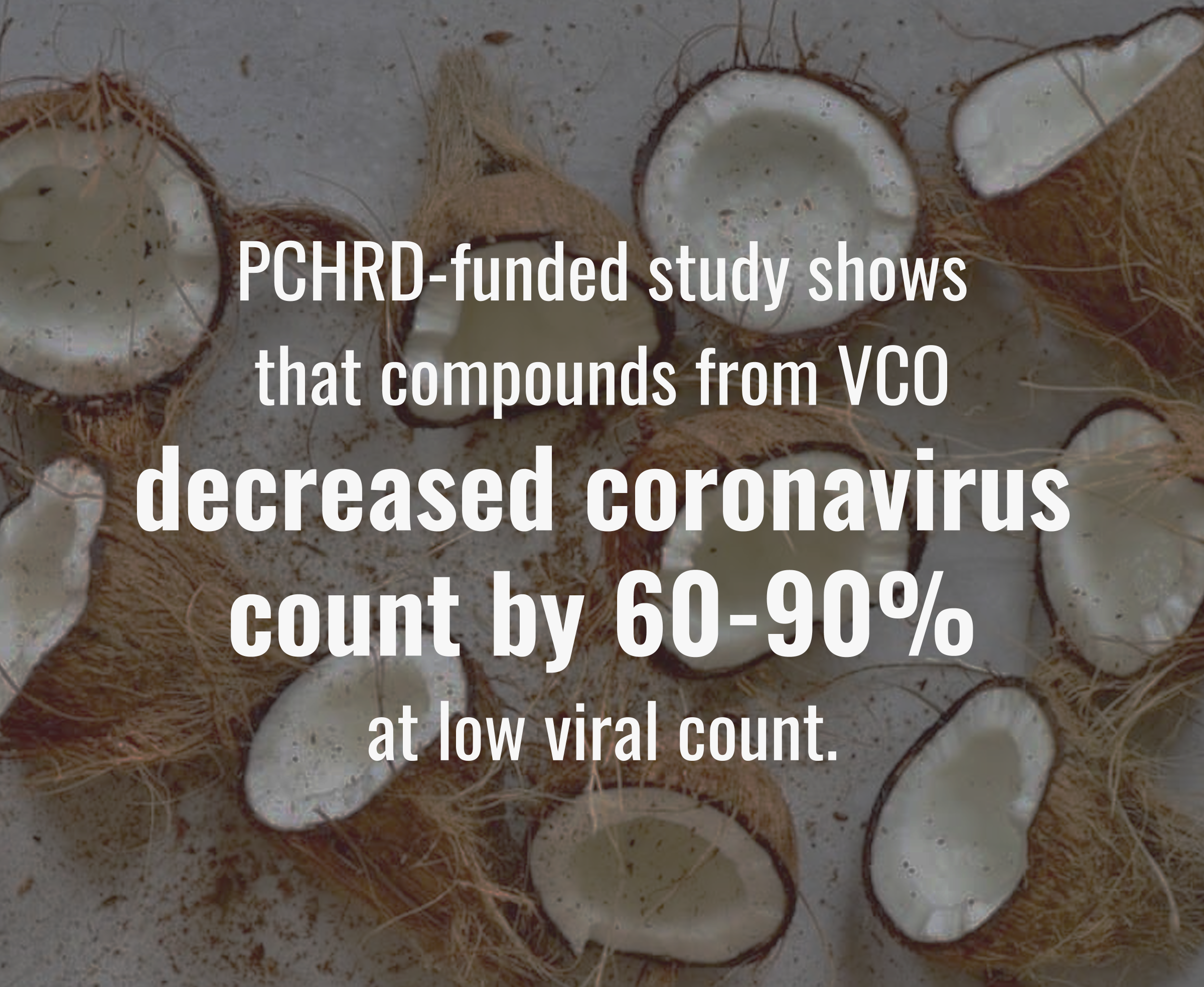
Led by Dr. Fabian Dayrit of the Ateneo de Manila University, the study aims to investigate whether coconut oil compounds, monolaurin and lauric acid, can be used as antiviral agents against COVID-19. Based on previous studies, these compounds are effective at killing viruses.
Tuklas Lunas Program: Drug Discovery and Development from Philippine Biodiversity
Recognizing the potential of the country’s natural resources for the discovery of novel drug compounds and local expertise in drug development, the DOST-PCHRD established the Tuklas Lunas Program. The priority conditions to be addressed includes cardiovascular diseases, cancers, and diabetes mellitus, and important communicable diseases such as tuberculosis and drug-resistant infections.
Tuklas Lunas Development Center: Mushroom Technologies
This research program on myko-mining and myko-pharming, headed by Dr. Renato G. Reyes from Central Luzon State University, works on the discovery and study of wild edible and poisonous mushrooms in Luzon Island, Philippines for their medicinal properties, and to develop functional food products from prioritized species of mushrooms. To date, the program was able to produce mushroom-based chips and shing-a-ling, generation of three bioactive extracts, and optimization of cultivation processes for priority mushroom species.
Improving Neurocognition through Dance and Kinesthetics (INDAK)
Headed by Dr. Jaqueline Dominguez and implemented by the Institute of Neurosciences of the St. Luke’s Medical Center -Quezon City, the INDAK program embraces the ability of dance, specifically ballroom dancing, to stimulate cognition, and physical and social activity. Currently, INDAK is conducted as an individualized home-based program, or facility-based program at the Institute for Dementia Care Asia, for elderly with mild cognitive impairment.
The 5th NRDC is hosted by the DOST in collaboration with the Commission on Higher Education (CHED), Department of Agriculture (DA), Department of Environment and Natural Resources (DENR), Department of Information and Communications Technology (DICT) and Department of Trade and Industry (DTI).
UN Secretary-General António Guterres appointed Dr. Jaime C. Montoya, Executive Director of the Department of Science and Technology - Philippine Council for Health Research and Development (DOST-PCHRD) as one of the 15 eminent scientists to draft the 2023 Global Sustainable Development Report (GSDR) in a UN official announcement yesterday in New York City.
Produced once every four yers, the SDG report aims to employ the scientific perspective in guiding policymakers on the state of global sustainable development, and serve as a ‘strong evidence-based instrument’ in eradicating poverty. The said report will also feed the ‘high-level global review” of the 2030 Agenda at the United Nations in September 2030.
The designation of the independent group followed an extensive consultation process that involved nominations from UN member states which concluded in December 2019. The 15 scientists were selected by UN Sec-Gen Guterres to author the GSDR and conduct a follow-up and review of the 2030 Agenda for SDGs.
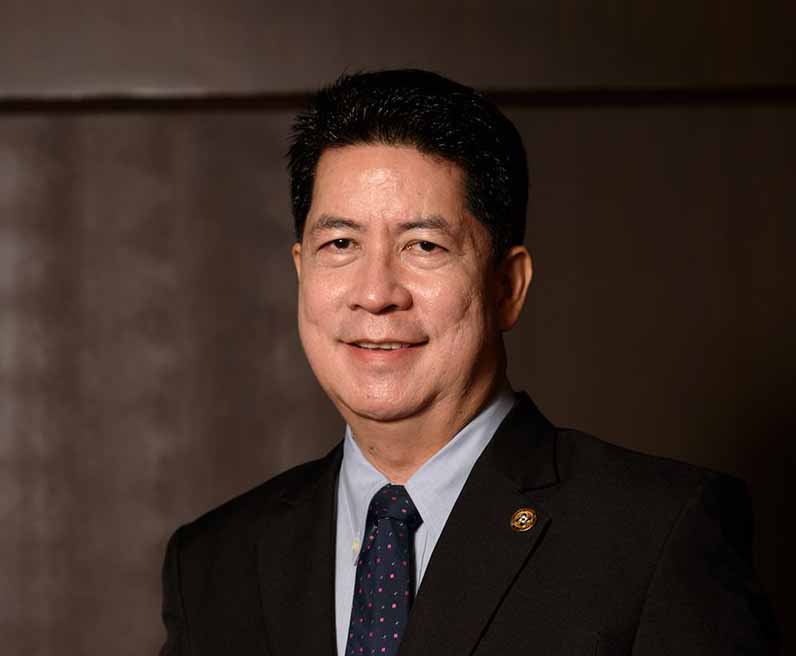
“We are honored to be selected as part of the distinguished experts to author a very significant report on the global SDGs. Being a health research scientist in the Philippines, a developing country, enables us to contribute unique and substantial information that is relevant to sustainable development. It is without a doubt that I assure our UN member states and our fellow Filipinos that our efforts will always be directed towards the benefit of all through science and technology,” said Dr. Montoya.
The “diverse group,” according to the UN, represents a wide range of disciplines and are composed of the following scientists: John Agard (Trinidad and Tobago), Kaltham Ali Al-Ghanim (Qatar), Sergey N. Bobylev (Russian Federation), Opha Pauline Dube, (Botswana), Ibrahima Hathie (Senegal), Norichika Kanie (Japan), Nyovani Janet Madise (Malawi), Shirin Malekpour (Australia), J. Jaime Miranda (Peru), Jaime C Montoya (Philippines), Jiahua Pan (China), Åsa Persson (Sweden), Ambuj D Sagar (India), Imme Scholz (Germany), Nancy Shackell (Canada).
Led by Dr. Agard and Dr. Scholz, the independent group will author the second report of its kind. The first GSDR has been released in September of 2019 entitled “The Future is Now: Science for Achieving Sustainable Development.”
As the country’s lead coordinator for health research and development initiatives, PCHRD supports Filipino researchers in health research innovation, policy recommendations, and technology commercialization, provides scholarships to Filipino students in the field of health and medicine, and establishes information and communication systems to disseminate health research information both for local and international stakeholders. PCHRD is also at the forefront of the country’s fight against the current COVID-19 pandemic.