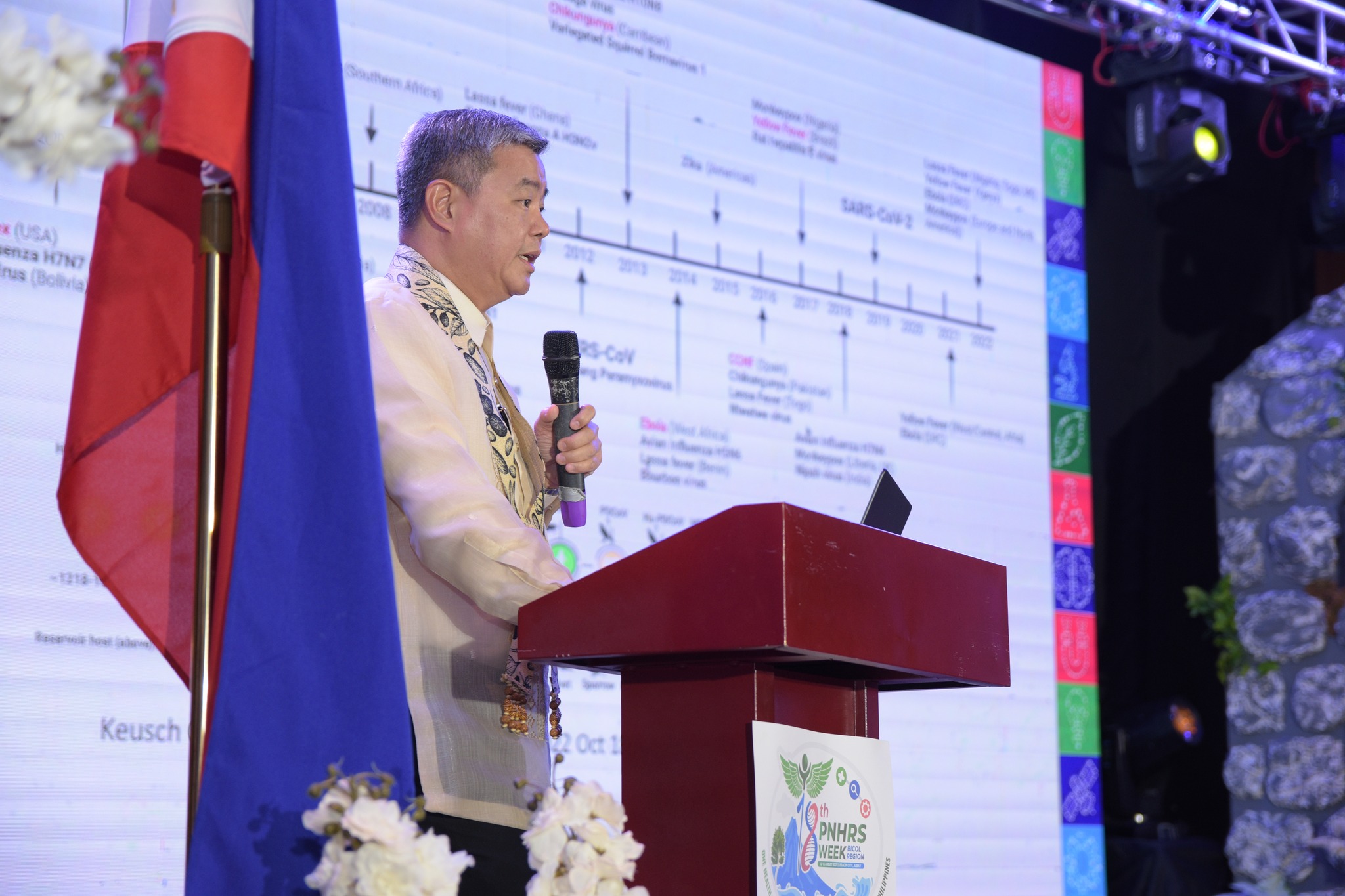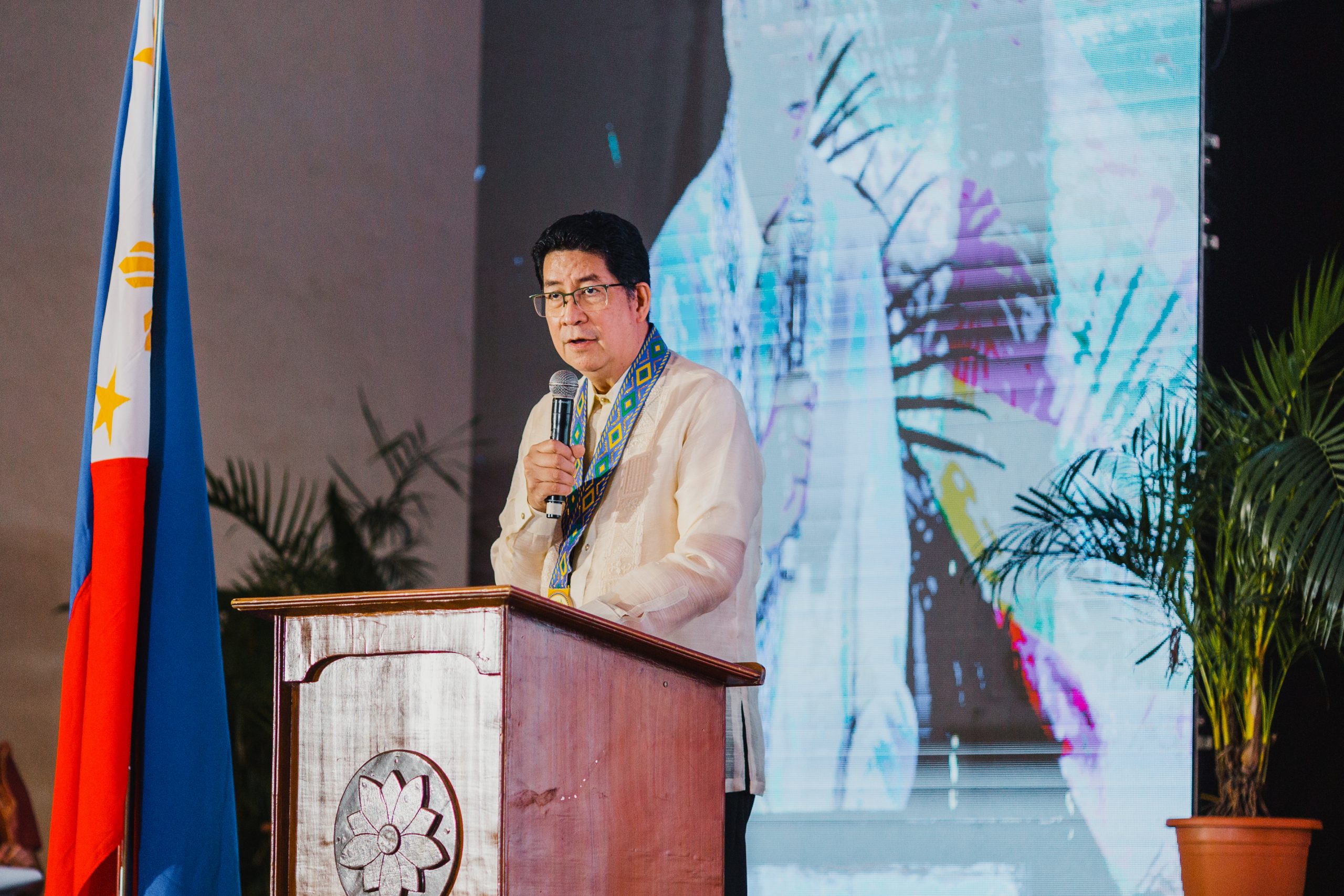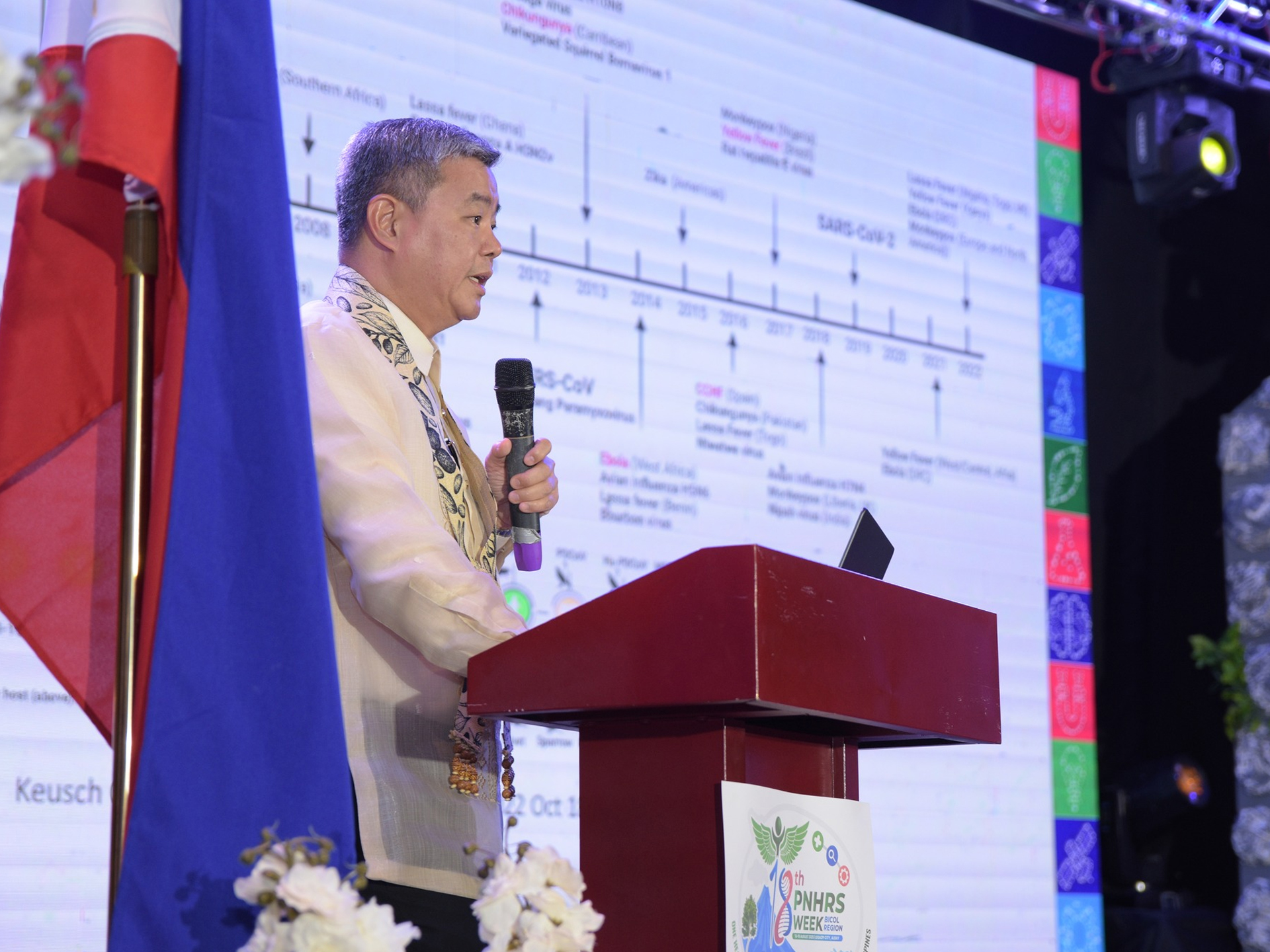
“Health equity is a commitment. One Health gives us the blueprint. Universities give us the tools,” said University of the Philippines (UP) Manila Chancellor Dr. Michael L. Tee in his keynote presentation during the opening ceremonies of the 18th Philippine National Health Research System (PNHRS) Week, held on 13 August 2025 in Legazpi City, Albay. The event was inspired by the theme, “One Health for All: Igniting Transdisciplinary Solutions for a Healthier Philippines.”
Dr. Tee explained that weaknesses in existing systems often make health inequities worse. Surveillance networks remain fragile, leaving communities without timely information on emerging threats. Families in rural and poor communities continue to carry the heavier burden of diseases that spread from animals to humans, such as rabies and dengue. Environmental degradation and climate change further magnify these risks, creating conditions where already vulnerable groups struggle the most. “Health equity requires more than expanding hospital capacity or financing reforms, and calls for commitment to address these uneven burdens of the people,” he noted.
Dr. Tee also emphasized the One Health Approach as a guiding framework for building more resilient systems. It recognizes that human health is closely linked to animal and environmental health. He cited the growing threat of antimicrobial resistance as an example of how the approach equips countries to respond before problems worsen. It also strengthens preparedness against zoonotic diseases, supports environmental interventions, and helps communities adapt to climate-related risks and disasters. “The One Health Approach provides the blueprint for preventing crises and building systems capable of withstanding threats,” Dr. Tee said.
“Universities and other academic institutions carry a responsibility beyond their campuses,” Dr. Tee added. “Through the One Health University Network’s threefold mandate of education, research, and extension service, we in the academe are uniquely positioned to turn One Health into practical tools.” He explained that education prepares future health leaders with the knowledge and perspective to apply the approach; research generates the evidence needed to guide policies, and extension work ensures that communities directly benefit from academic outputs.
He cited the Field Epidemiology Training Program (FETP) as an example of how academic training delivers real-world impact. During the COVID-19 pandemic, FETP graduates strengthened the country’s ability to respond quickly to outbreaks, trace infections, and help inform local authorities. “This is how universities give ‘the tools’ that turn theory into practice. Without such preparation, the One Health Approach would remain an abstract idea rather than a functioning strategy,” Dr. Tee explained.
Dr. Tee concluded by emphasizing that the promise of Universal Health Care (UHC) cannot be fulfilled unless health systems adopt the One Health Approach as the blueprint for equity. He stressed that the approach only becomes actionable when universities provide the tools to implement it by training health leaders, producing research that guides policies, and extending expertise to communities. In doing so, universities can transform One Health from a concept into practical strategies that strengthen prevention, preparedness, and fairness in health systems. For Filipinos, this means having a healthcare system that anticipates risks, protects communities, and builds a healthier nation for generations to come.

This year, the Philippine National Health Research System (PNHRS) Week returns with a bold call: “One Health for All,” as it gathers over 500 health researchers, policymakers, and stakeholders from across the country on 13-15 August 2025 in Legazpi City, Albay to advance inclusive, transdisciplinary solutions addressing the interconnected challenges of human, animal, and environmental health.
Hosted by the Bicol Consortium for Health Research and Development (BCHRD) in partnership with the Department of Science and Technology - Philippine Council for Health Research and Development (DOST-PCHRD), the 18th PNHRS Week will serve as a national convergence point for regional research consortia, academic institutions, government agencies, and civil society organizations championing health equity through science and innovation.
Anchored on the theme “One Health for All: Igniting Transdisciplinary Solutions for a Healthier Philippines,” the celebration will spotlight the urgent need for collaborative frameworks that break down silos between disciplines and sectors to deliver holistic, evidence-based responses to public health threats.
The three-day event will feature plenary sessions, research competitions, policy dialogues, and technical committee meetings that reflect the System’s priority to bridge research, policy, and practice in line with the National Unified Health Research Agenda (NUHRA).
Key Highlights:
Talakayang HeaRT Beat Press Conference (August 13)
Kicking off the celebration, the Talakayang HeaRT Beat press conference will feature key dignitaries from the four core implementing agencies of PNHRS to provide insights into the activities of the 3-day celebration. This will provide context and direction for the upcoming plenaries, fora, meetings, and competitions, and will be immediately followed by the official opening ceremonies and exhibit launch.
Plenary Session 1: Home-grown Inter-agency Initiatives towards Optimal Collaborations
The opening plenary will highlight successful multi-agency health projects developed and scaled across the country, focusing on local solutions with national impact.
Research Competitions and Exhibits (August 14)
Students and professionals from across the country will present their research through oral and poster sessions, while the 3-Minute Pitch to Policymakers will challenge researchers to distill key findings into compelling, policy-ready messages.
Committee and Business Meetings
Converging the national Technical Working Committees on Research Utilization, Research Agenda Management, and others, the sessions aim to refine implementation strategies of the PNHRS Strategic Plan and national research priorities.
Plenary Session 2: Innovation, Education, and Governance Integration in One Health (August 15)
The final plenary will explore how aligning innovations, academic initiatives, and governance mechanisms can lead to more sustainable and inclusive health systems under the One Health framework.
Celebrated annually every second week of August under Presidential Proclamation No. 1309, the PNHRS Week affirms the country’s long-term vision of a responsive, inclusive, and collaborative national health research system that works for every Filipino.
For updates and registration details, visit the DOST-PCHRD Facebook page.

Representatives from the Department of Science and Technology - Philippine Council for Health Research and Development (DOST-PCHRD) flew to Bicol to participate in the 3rd Joint Meeting in preparation for the 18th Philippine National Health Research System (PNHRS) Week Celebration, organized in partnership with the Bicol Consortium for Health Research and Development (BCHRD). The face-to-face meeting was held at the Lotus Blu Hotel in Legazpi City, and included a series of on-site activities such as food tasting and an ocular inspection of the event venue.
The on-ground presence of both the DOST-PCHRD and BCHRD team ensured a hands-on approach to finalizing key logistical and program details, while the rest of the PCHRD working committees actively participated via Zoom video conferencing. This hybrid setup allowed for collaborative discussions and streamlined decision-making in preparation for the upcoming celebration.
The PNHRS Week is celebrated every second week of August in accordance with Presidential Proclamation No. 1309 of June 2007.